The Prediabetes Diet Explained: What to Eat, What Foods to Avoid, and What the Research Says
It’s the first question that comes to mind after a prediabetes diagnosis: what does a prediabetes diet look like? In other words: What can I eat?
Unfortunately, it’s a question that can’t be easily answered in a 15-minute doctor’s appointment. So people often hear “cut out carbs” or “lose weight,” advice that is meant to be helpful but is likely confusing. Vague dietary guidance produces vague results.
This post is for those who want more clarity around foods to eat that help reverse prediabetes. Learn about the prediabetes diet in specific, evidence-based terms: which foods to prioritize, which to limit, and what the research says about dietary patterns that improve blood sugar and insulin sensitivity. At the end, you will find a free 7-day meal plan pdf for prediabetes to put these principles into practice.
What Is Prediabetes?
Prediabetes means your blood sugar is higher than normal but not yet high enough to be classified as type 2 diabetes. In the United States, it is defined by:
- an A1C between 5.7% and 6.4%, or
- a fasting glucose between 100 and 125 mg/dL, or
- a 2-hour glucose between 140 and 199 mg/dL on an oral glucose tolerance test.
Prediabetes is characterized by insulin resistance, a state in which your cells have become less responsive to insulin. Insulin is the hormone that moves glucose from the bloodstream into cells. It is produced and released by beta cells in the pancreas. When cells do not respond efficiently to insulin, glucose remains in circulation, i.e., your blood sugar rises. Your pancreas compensates by producing more insulin. The increased work load on the pancreas and subsequent loss of beta-cell function leads to further progression towards type 2 diabetes.
Diet influences this process directly. The foods you eat determine how much glucose enters your bloodstream, and how quickly, as well as how much insulin is needed for your body to handle it. That is why dietary changes are such a powerful lever for reversing prediabetes.
How Food Affects Blood Sugar
Not all foods raise blood sugar equally. Several factors determine the impact a meal or snack will have on your blood sugar levels (postprandial glucose). Understanding these will set the foundation for a sound prediabetes diet.
Carbohydrate type and amount. There are three main types of carbohydrates:
- Starches (complex carbohydrates): found in starchy vegetables such as potatoes and corn, pulses such as beans, lentils, and chickpeas, and grains
- Sugars (simple carbohydrates): found naturally in fruits, milk, and dairy products, or refined into added sugars
- Fiber: an indigestible carbohydrate found only in plant foods
Both starches and sugars are broken down into glucose during digestion, which is why carbohydrates have a more direct effect on blood sugar than protein or fat. Fiber does the opposite: it slows the rate at which glucose enters the bloodstream. Foods high in soluble fiber, like oats, beans, and vegetables like broccoli, are particularly effective at this. The more fiber a carbohydrate-containing food provides, the more gradual its effect on blood sugar tends to be. Increasing fiber intake is one of the most consistently supported dietary strategies for improving postprandial glucose.
Degree of processing and preparation. How a carbohydrate-containing food is processed or prepared significantly affects how quickly it raises blood sugar. Whole grains, legumes, and minimally processed food sources of carbs retain their fiber and cell structure, which slows digestion and produces a more gradual blood sugar rise. When those food sources are milled or refined (refined carbohydrates), that structure gets stripped away and broken down before it even reaches your plate. Processing eliminates some of the digestion steps that would otherwise be happening in our GI tracts. As a result, the carbs in those foods are absorbed more quickly and produce a rapid rise in blood sugar.
Cooking method matters too: pasta cooked al dente raises blood sugar more slowly than the same pasta cooked soft, and cooling cooked starches like rice or potatoes before eating increases their resistant starch content, which further slows digestion. In general, the more intact and less processed a food, the lower its glycemic impact.
Protein. Protein does not raise blood sugar directly (unless consumed in very high amounts at a time – 75+ grams). It slows gastric emptying, which means glucose from the rest of the meal enters the bloodstream more gradually. Including a protein source at meals lowers the peak of the blood sugar response compared to eating the same amount of carbohydrate alone.
Fat. Like protein, fat slows stomach emptying and produces a more gradual rise in blood sugar. The type of fat matters for long-term metabolic health, but at the meal level, the presence of fat reduces the speed of glucose absorption regardless of source.
Understanding these mechanisms sets the foundation of eating well for prediabetes. The goal is not to eliminate any one food group. It is to make choices that help your body handle the glucose in your foods.
What to Eat with Prediabetes
Non-Starchy Vegetables
Non-starchy vegetables are the most unambiguously beneficial foods for blood sugar management. They are low in carbohydrates, good sources of fiber, and provide vitamins, minerals, and antioxidants that support metabolic health.
Examples include leafy greens (spinach, kale, arugula), cruciferous vegetables (broccoli, cauliflower, Brussels sprouts), zucchini, peppers, cucumbers, asparagus, and green beans. Start by adding some non-starchy veggies to lunch or dinner, and build towards filling at least half your plate with non-starchy vegetables at most meals (see Diabetes Plate, below).
Fiber-Rich Carbohydrates
Carbohydrates do not need to be eliminated with prediabetes. As described above, not all carb-containing foods will affect your blood glucose the same way. Fiber-rich, minimally processed carbohydrates (legumes, whole grains, and most fruits) produce slower blood sugar responses and provide nutrients that support gut health and insulin sensitivity.
The recommended fiber intake is 14 g per 1000 calories, or at least 25g/day for women and 35g/day for men. Fiber-rich carbohydrates include:
- Legumes (lentils, chickpeas, black beans)
- Whole grains (oats, quinoa, barley, whole grain bread)
- Most whole fruits (berries, avocados are especially good sources of fiber)
Note: Non-starchy vegetables (see previous section) are low in carbohydrates and also provide fiber.
[Related: Ezekiel Bread’s Glycemic Index: A Smart Choice for Prediabetes]
Adequate Protein
Protein supports blood sugar stability by slowing digestion and reducing the glycemic impact of meals. Beyond its effect on individual meals, protein supports muscle mass, which matters for long-term blood sugar management. Muscle tissue is one of the primary sites for glucose uptake in the body, including through an insulin-independent mechanism. That pathway becomes especially relevant in people with insulin resistance, whose cells are less responsive to insulin’s signaling. More muscle mass means greater capacity to clear glucose from the blood, even when insulin is not working efficiently.
Good options for protein include plant-based sources such as tofu, tempeh, and legumes, such as lentils and beans. (Legumes are great sources of both protein and fiber, and are inexpensive, making them a particularly good choice for most people.) Animal-derived sources of protein include eggs, fish (especially fatty fish like salmon and sardines for their omega-3 content), chicken, turkey, Greek yogurt, and cottage cheese. Choose lean or reduced-fat animal-derived sources of protein, to keep your saturated fat intake in check.
Healthy Fats
Dietary fat does not raise blood sugar, and can improve satiety and reduce overall glycemic response when included in meals. The fats most consistently linked to better health outcomes are unsaturated fats from whole food sources.
Avocado, nuts (almonds, walnuts, pistachios), seeds (chia, flax, hemp), and fatty fish are all good sources of healthy fats. Choose vegetable or seed oils over fat sources higher in saturated fats.
If you are watching your weight, be mindful of portion sizes. It can be easy to focus only on keeping your blood sugar in range and forget about portions.
Water and Unsweetened beverages
Staying properly hydrated is associated with a lower risk of diabetes. Choosing water and unsweetened beverages is one of the simplest ways to support steady blood sugar. Sugary drinks can raise your blood sugar quickly, while water, sparkling water, or unsweetened tea help you stay hydrated without adding extra glucose.
The Diabetes Plate Method
Knowing which foods to eat is one thing. Knowing how to put them together at a meal is another.
The American Diabetes Association‘s Diabetes Plate is one of the most practical tools for building blood sugar-friendly meals without counting carbohydrates or measuring out portions. Here is how it works.
Start with a standard 9-inch dinner plate and divide it into sections:
- Half the plate: non-starchy vegetables. This is the foundation. Fill half your plate with vegetables like salad greens, broccoli, zucchini, peppers, or green beans. These are low in carbohydrates and high in fiber.
- One quarter of the plate: lean protein. Fill one quarter with a protein source: eggs, fish, chicken, tofu, cottage cheese, or legumes.
- One quarter of the plate: high quality carbohydrates. Fill the remaining quarter with a fiber-rich carbohydrate: whole grains, legumes, starchy vegetables like sweet potato, or whole fruit.
- Beverage: water or a low-calorie drink. Skip the juice or sweetened drink alongside your meal.
As you can see in the figure below, I like to make space for healthy fats on my version of the Diabetes Plate.
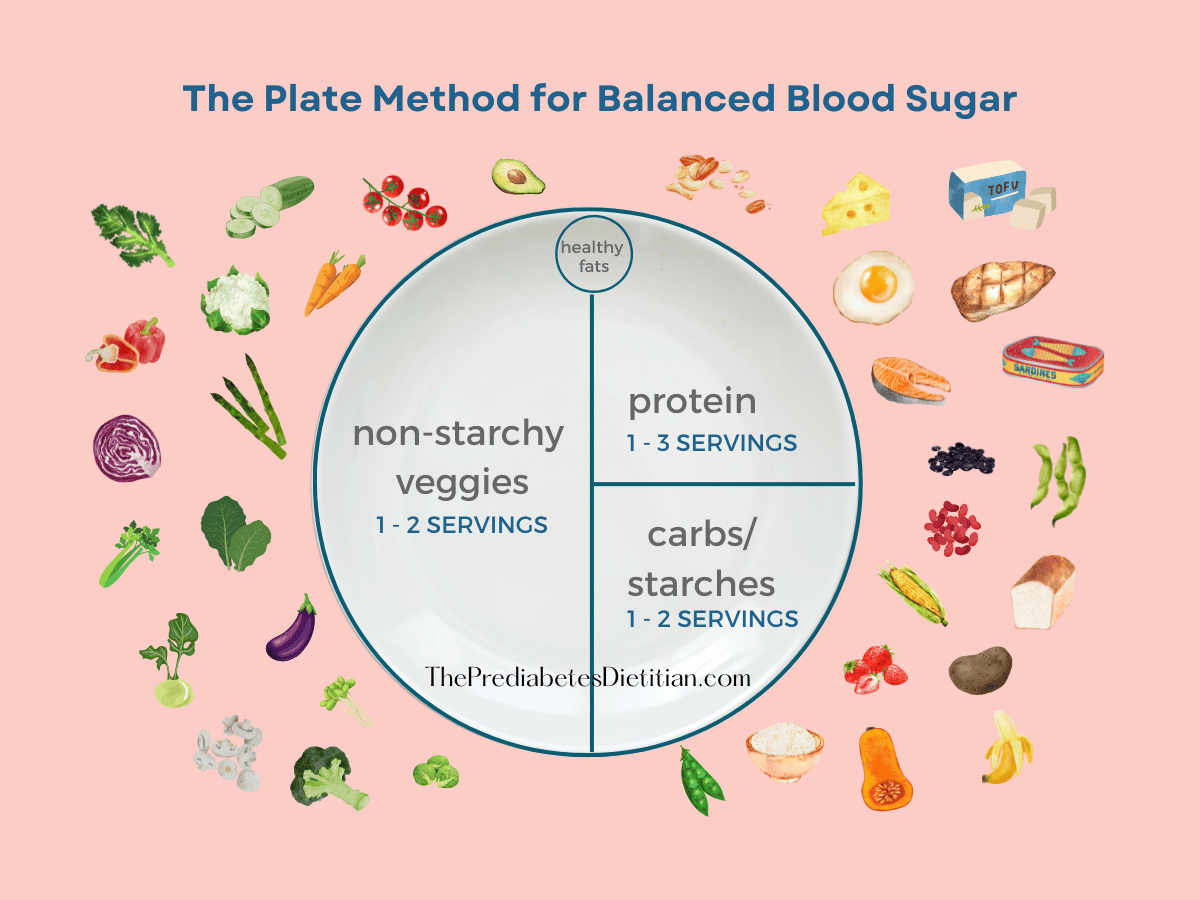
The plate method works because it creates the macronutrient balance that supports blood sugar stability: plenty of fiber, adequate protein and fat to slow glucose absorption, and a moderate, quality carbohydrate portion. It also aligns with the food categories covered in this post. Using a 9” plate is useful for portion control, but remember that everyone has different calorie requirements depending on their size, activity levels, and weight goals.
The Diabetes Plate is a helpful tool, though it will not work for every meal or situation, nor does it need to. The goal is to use it as a guide to help you shift your overall dietary pattern towards more non-starchy veggies, more fiber, and an appropriate amount of healthy protein and fat.
Foods to Avoid or Limit with Prediabetes
Sugary Beverages
Sugary drinks include sugar-sweetened beverages (soda, fruit drinks, sweetened tea or coffee, coffee drinks, energy drinks) and 100% fruit juices. These drinks deliver large amounts of rapidly absorbed glucose with little to no fiber or protein to slow absorption. Unlike solid food, liquids do not trigger the same satiety signals, making it easy to consume significant calories without feeling full.
Even when a fruit juice claims to have no ‘added sugars’, it will have the naturally-occurring sugars from the fruit. Juicing removes the fiber that slows glucose absorption and concentrates the sugar. A glass of orange juice raises blood sugar significantly faster than eating an orange. (And a glass of OJ will contain the juice of 2-4 oranges in it, not just one.)
Refined and Highly Processed Carbohydrates
White bread, many breakfast cereals, crackers, pretzels, and packaged baked goods are digested quickly and can produce rapid blood sugar spikes. This does not mean they can never be eaten, just that they should not make up the bulk of daily carbohydrate intake for someone managing prediabetes.
When you do eat refined carbohydrates, pairing them with protein, fat, or fiber reduces the blood sugar response.
Saturated Fats
Diets high in saturated fats have been associated with a number of health complications, including increased insulin resistance and diabetes. The recommendation is to limit intake of saturated fats to no more than 10% of daily calories.
Fat sources that are solid at room temperature tend to be higher in saturated fats. Avoid cooking with fats high in saturated fats, such as butter, coconut oil, or lard. Limit fatty cuts of meat, as well as fried foods.
Can You Reverse Prediabetes? What the Research Says
Several large scale diabetes prevention studies from different countries have shown that yes, prediabetes can be reversed, and progression to type 2 diabetes can be avoided or delayed, through diet and lifestyle changes.
The best known of these is the U.S. Diabetes Prevention Program (DPP). In this large randomized trial, participants who made lifestyle changes, including dietary modifications and 150 minutes of moderate physical activity per week, reduced their risk of progressing to type 2 diabetes by 58%. This outperformed metformin, which reduced risk by 31%.
The dietary component of the DPP was not a specific named diet. Study participants were encouraged to reduce total calories and decrease fat intake while increasing physical activity mainly through walking.
More recent research has examined different dietary patterns and their effect on blood sugar response. The consistent finding is that prediabetes is highly modifiable, and that dietary changes are key to success.
Dietary Patterns Supported by Research
There is no optimal macronutrient distribution that is recommended for people with or at risk for diabetes. Your personal preferences and health goals should guide that decision, in collaboration with a health professional such as a registered dietitian. That said, the research on prediabetes and blood sugar management points to a few beneficial dietary approaches.
Mediterranean Diet
The Mediterranean diet, built around vegetables, legumes, whole grains, fish, olive oil, and nuts, has among the strongest evidence for improving insulin sensitivity and reducing cardiovascular risk. Multiple randomized controlled trials have shown improvements in A1c and fasting glucose in people following Mediterranean-style eating patterns.
Low-Carbohydrate Diet
Reducing carbohydrate intake lowers postprandial blood sugar, which can meaningfully improve A1c over time. Low-carbohydrate diets, where about 26 – 45% of your total daily calories come from carbohydrates, tend to produce significant short-term improvements in blood sugar markers, though studies report challenges with long-term adherence. If following a low-carb diet, be mindful of emphasizing fiber-rich carbohydrate foods so that fiber goals are still met.
DASH4D Diet
The DASH (Dietary Approaches to Stop Hypertension) diet has a modified version for people with diabetes, called DASH4D. Like the original DASH diet, DASH4D emphasizes vegetables, fruits, whole grains, and low-fat dairy while limiting sodium and red meat. In addition, DASH4D has fewer carbohydrates and more unsaturated fat. It was designed for both blood pressure and blood sugar management and has been shown to improve both.
What do these dietary patterns have in common? They all emphasize vegetables, fruit, fiber-rich carbohydrates (whole grains and legumes), lean protein, and healthy fats. The best dietary pattern for prediabetes is one that includes these elements and that you can sustain long term.
Prediabetes Diet Starting Points
You do not need to overhaul your diet all at once. Individual foods matter, but dietary patterns matter more. A few high-impact changes to start with:
- Replace sugar-sweetened beverages with water or zero-calorie drinks
- Add non-starchy veggies to your meals
- Intentionally pair carbohydrates with a source of protein, fat, or fiber
- Add fiber-rich foods where possible, such as whole grains or legumes
Small, consistent changes compound over time. The goal is not a perfect diet. It is a pattern that reduces insulin resistance and that you can stick to long-term.
A structured 7-day meal plan for prediabetes can make this easier by removing the daily decision-making from the equation. The free plan below gives you seven days of meals designed around the food choices and macronutrient balance covered in this post.
[Get the free 7-day meal plan for prediabetes]
The Bottom Line
The prediabetes diet is not a rigid, one-size-fits-all plan. Instead, it’s built on a set of practical principles: prioritizing fiber-rich, minimally processed foods; pairing carbohydrates with protein and fat; limiting sugar-sweetened beverages; and choosing healthy fats and lean protein sources. Together, these habits help reduce large, frequent swings in blood sugar and support more stable glucose levels over time.
Research consistently supports this approach: people who take action soon after a prediabetes diagnosis have the best chance of improving their blood sugar levels. Early, proactive changes can help reverse prediabetes or, at the very least, slow progression to type 2 diabetes.
Dr. Vanessa Infante is a registered dietitian nutritionist and PhD-trained nutrition scientist. She has directed a CDC-recognized Diabetes Prevention Program for nine years and specializes in diabetes prevention and insulin resistance.
Frequently Asked Questions
Yes. Whole fruit contains fiber, which slows glucose absorption, and provides vitamins and antioxidants that support overall health. Pairing fruit with nuts or cheese, or having fruit as desserts are excellent ways to enjoy them. Fruit juice and dried fruit are more concentrated sources of sugar and are worth moderating.
Not for prediabetes. Some people find it useful to count carbohydrates as part of their nutrition plan, though recommendations should be individualized. It’s important to take into consideration the quality of carbohydrates, not just the quantity. Choosing whole, fiber-rich sources over refined ones is a practical starting point that does not require tracking. Following the Diabetes Plate Method is simpler than counting carbs and very effective.
Largely yes. The dietary patterns that support blood sugar management in prediabetes are the same ones recommended for people living with type 2 diabetes. The main difference is urgency: prediabetes is often reversible, and an opportunity to make changes before greater loss of pancreatic beta-cell function and damage to organs and vessels occurs.
Dietary change is a powerful intervention, but research supports better long-term success with a multi-pronged approach. The DPP results were achieved by combining dietary changes with regular physical activity. Recent studies point to the benefits of addressing other modifiable risk factors, such as sleep hygiene and stress, to further improve blood sugar management.